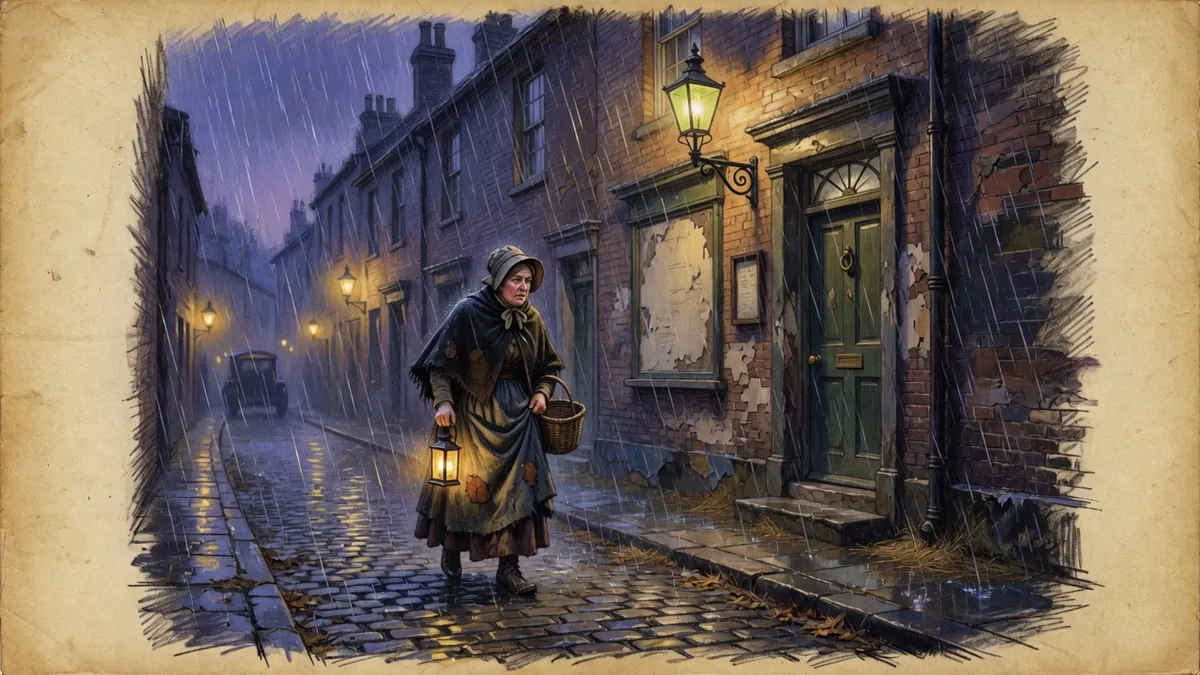
On a rainy morning in July 1865, a charwoman named Sophia Bishop entered a modest lodging house at 14 Margaret Street in London. She had been hired to lay out the body of a retired high-ranking military officer who had just died of cholera. The deceased was Inspector General of Military Hospitals, Dr. James Barry—one of the most decorated, quick-tempered, and legendary medical figures in the British Empire.
For over fifty years, Dr. Barry had been a household name in military circles. He was a man who walked with a high-stepping stride, wore three-inch raised heels beneath his uniform, kept a servant and a white poodle named Psyche by his side, and was notorious for challenging anyone to a pistol duel who dared insult his voice or small posture. He was also a brilliant surgical pioneer who had transformed military medicine from India to the West Indies.
The Charwoman's Discovery & The War Office Cover-Up
As Sophia Bishop unbuttoned the officer's tunic to wash the body, she stopped dead in her tracks. Underneath the military medals and padded wool uniform, Dr. James Barry possessed the unmistakable anatomy of a biological female. Even more shocking, physical examination revealed stretch marks on the abdomen—proof that this high-ranking Army surgeon had given birth earlier in life.
Sophia Bishop ran to report the discovery to the Army Medical Department. Staff Surgeon Dr. D.R. McKinnon, who signed the official death certificate without examining the body, was summoned immediately. When word reached the highest levels of the War Office, a panic erupted: the British Army had spent half a century employing a woman as its top military doctor.
The Conspiracy of Margaret Bulkley
To understand how a woman pulled off the greatest masquerade in military history, go back to Cork, Ireland, in the late 1790s. She was born Margaret Ann Bulkley, the daughter of a merchant who was sent to a debtor's prison. In 19th-century Britain, women were legally barred from attending university or studying medicine.
When her uncle—the famous Irish painter James Barry—died in 1806, he left a modest inheritance. Margaret’s mother, along with progressive family friends including Venezuelan revolutionary General Francisco de Miranda and the Earl of Buchan, devised a radical conspiracy: Margaret would cut her hair, assume the name "James Barry," and apply to medical school as a male teenager.
In 1809, at just fourteen years old, James Barry entered the University of Edinburgh Medical School. In 1812, Barry passed with flying colors, earning a Doctor of Medicine degree at seventeen. A year later, Barry joined the British Army as a Hospital Assistant.
The Cape Town Miracle: First Successful C-Section (1826)
In 1816, Dr. Barry was posted to Cape Town, South Africa, eventually rising to Colonial Medical Inspector. Barry was a strict vegetarian who drank only goat's milk, bathed twice a day, and enforced ruthless cleanliness in hospital wards decades before germ theory was accepted.
On July 25, 1826, came the defining moment of Barry’s surgical career. A local woman named Wilhelmina Munnik was in agonizing labor. In the 1820s, a Cesarean section was a death sentence carrying near 100% maternal mortality. Dr. Barry stepped into the candlelit room, washed his hands and instruments in clean water, and performed a precise abdominal incision.
Against all odds, both mother and child survived. It was the first documented, successful C-section in the British Empire where both mother and infant lived. In gratitude, the family named the child Thomas James Barry Munnik.
Dueling, Sanitation Battles, and Scutari
Maintaining a secret identity inside the hyper-masculine British Army required constant vigilance. Whenever fellow officers made jokes about Barry's smooth face or high voice, Barry pulled out a pistol. In 1819, Barry fought a famous dawn pistol duel with Captain Josias Cloete at the Castle of Good Hope after Cloete insulted his voice; both men fired and missed, satisfying honor.
In 1855, during the Crimean War, Inspector General Barry traveled to the military hospital at Scutari, where Barry publicly reprimanded Florence Nightingale for inadequate hospital sanitation. Nightingale later wrote in her diary: "He was the most hardened creature I ever met in the whole Army... After he was dead, I was told that Barry was a woman."
The 100-Year Security Embargo
Following Barry’s death in 1865, the War Office issued a total gagger. They placed a strict 100-year security embargo on Dr. James Barry’s official service records, locking them in government vaults and refusing historians access until the late 1960s.
Dr. James Barry was a master surgeon who saved thousands of lives, pioneered surgical hygiene, and proved that brilliance knows no gender boundary.