Before sunrise on May 13, 1862, a Confederate steamer moved through Charleston Harbor. It carried military supplies, guns, and the confidence of a city that believed its defenses could not be pierced from within. At the wheel was not a Confederate officer. It was Robert Smalls, an enslaved twenty-three-year-old maritime worker from South Carolina.
Smalls had his wife, children, and other enslaved people hidden on board. He wore the captain's hat, copied the ship's normal signals, and guided the vessel past Confederate checkpoints. One mistaken whistle, one suspicious guard, or one nervous glance could have meant death or permanent separation for everyone involved. Instead, the ship passed through Charleston Harbor, moved beyond Fort Sumter, lowered its Confederate flag, raised a white sheet, and reached the Union blockade.
The vessel was the Planter, a real Confederate transport. Smalls delivered not only a ship, but guns, cargo, and valuable military intelligence. More importantly, he delivered people. The escape became one of the most dramatic acts of self-emancipation of the Civil War.
The Harbor Was His Classroom
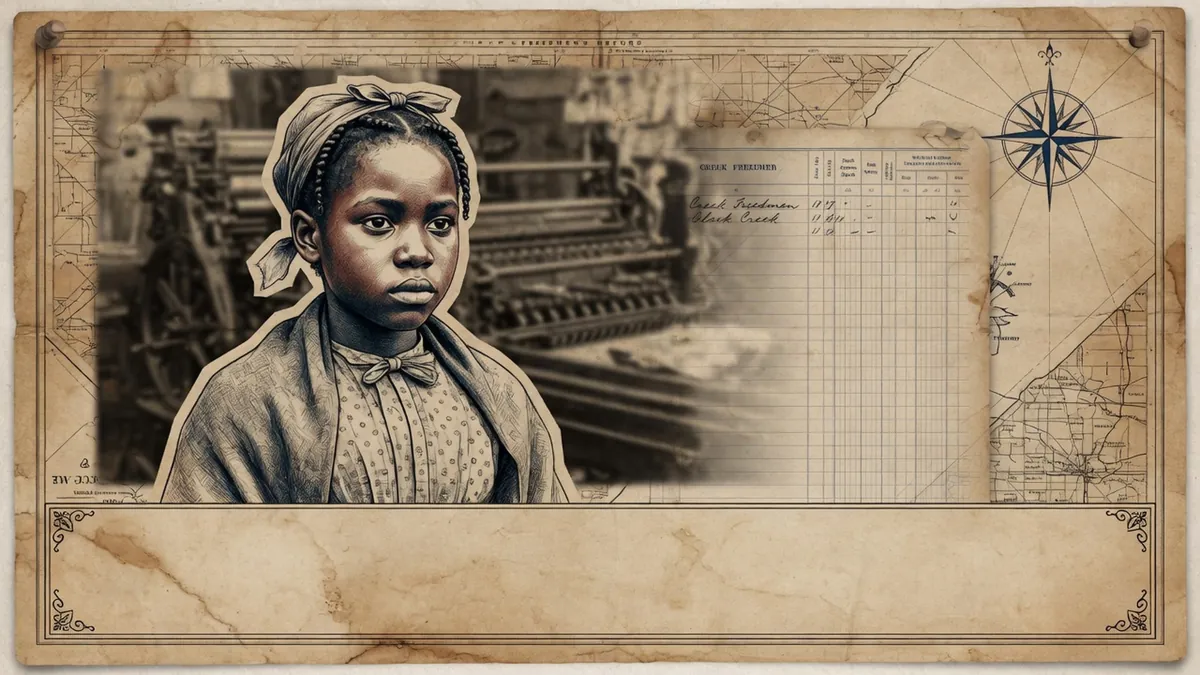
Robert Smalls was born enslaved in Beaufort, South Carolina, in 1839. As a young man, he was hired out in Charleston, where slavery operated not only on plantations but also through urban trades, docks, hotels, workshops, and maritime labor. Smalls learned the waterfront from inside a system designed to profit from him while denying his full humanity.
On the water, he learned what mattered: channels, currents, sandbars, tides, signals, forts, and the habits of officers. Confederate law would not grant an enslaved Black man the dignity of formal command. But reality required his skill. By the outbreak of the Civil War, Smalls was working aboard the Planter as a wheelman, the person who physically steered the ship through dangerous water.
That contradiction became his opening. Slavery had forced knowledge out of him. Smalls used that knowledge against slavery itself.
The Night the Officers Slept Ashore
On the night of May 12, 1862, the white officers of the Planter left the vessel and slept ashore. That choice violated military caution and created a narrow opportunity. Smalls and the Black crew moved quietly. They took control of the steamer, stopped to pick up family members and other enslaved people, and turned toward the harbor mouth.
The escape worked because it was not merely a flight. It was a performance. Smalls knew the captain's routines. He understood the signals. He reportedly wore the captain's hat and moved with enough confidence to pass as the man Confederate guards expected to see from a distance.
The Planter passed Confederate defenses, including Fort Sumter, the symbolic birthplace of the Civil War. Behind the ship was slavery. Ahead were Union vessels that could easily mistake a Confederate steamer for an attack. Smalls lowered the Confederate flag and raised a white sheet as a signal of surrender. The Union sailors understood. The people aboard were free.
More Than a Daring Escape
Northern newspapers celebrated Smalls almost immediately. Abolitionists recognized the political power of the story. The Confederacy had insisted that Black people were passive, dependent, and unfit for citizenship or military service. Smalls exposed that lie through action. He had studied the system that trapped him, seized its tools, and brought others out with him.
Smalls met President Abraham Lincoln, and historians often place his story within the broader pressure campaign that helped persuade the Union to enlist Black soldiers. His value to the Union did not end with the Planter. He continued serving during the war, including as a pilot along the Southern coast. In one later battle, when a white captain reportedly abandoned his post under fire, Smalls took command.
The Part Most Versions Skip
The most powerful part of Robert Smalls' life may be what happened after the famous escape. After the Civil War, he returned to South Carolina and entered Reconstruction politics. He purchased the Beaufort house associated with his former enslavers. He helped write South Carolina's new constitution. He advocated public education, voting rights, and civil rights for formerly enslaved people.
Then he served in the United States Congress.
That arc makes the story larger than a single morning in Charleston Harbor. Smalls did not only escape slavery. He entered the political struggle over what freedom would mean in a nation emerging from civil war. He lived through the promise of Reconstruction and the violent backlash against it. His legacy belongs not only to naval history, but to the unfinished story of American democracy.
Why Robert Smalls Still Matters
Today, public memory is still catching up to Robert Smalls. Recent efforts in South Carolina to honor him with a State House grounds monument show how long it can take for a country to recognize the people who changed it. The delay is revealing. Smalls was famous in his own lifetime, but the simplified version of American history often left Reconstruction's Black leaders in the margins.
Robert Smalls deserves to be remembered correctly: not as a lucky fugitive, and not only as the hero of a daring escape, but as a strategist, sailor, liberator, wartime public figure, Reconstruction politician, and congressman. He turned forced labor into expertise, expertise into freedom, and freedom into public power.
Sources and Bibliography
- National Park Service. "Robert Smalls." https://www.nps.gov/people/robert-smalls.htm
- U.S. House of Representatives, History, Art & Archives. "SMALLS, Robert." https://history.house.gov/People/Listing/S/SMALLS,-Robert-(S000502)/
- Biographical Directory of the United States Congress. "SMALLS, Robert." https://bioguide.congress.gov/search/bio/S000502
- South Carolina Encyclopedia. "Smalls, Robert." https://www.scencyclopedia.org/sce/entries/smalls-robert/
- Associated Press. "South Carolina to build first monument to an African American on Statehouse grounds." https://apnews.com/article/8f7d38ec73e5aeec3acb10644408a269
- Lineberry, Cate. Be Free or Die: The Amazing Story of Robert Smalls' Escape from Slavery to Union Hero. St. Martin's Press, 2017.
- Miller, Edward A. Jr. Gullah Statesman: Robert Smalls from Slavery to Congress, 1839-1915. University of South Carolina Press, 1995.
Methodological note: This article reconstructs the Planter escape and Smalls' later public life from public-history sources, congressional biographies, South Carolina historical references, and modern scholarship. Where precise details vary across accounts, the narration uses cautious wording rather than inventing certainty.
Legacy in Strokes (Uncovering the unseen footprints of history's giants). Watch the complete video documentary on our official YouTube channel.