To many, George Washington Carver is remembered through simplified children's books as the "peanut man"—a polite, quiet caricature who developed recipes in a Southern school. But this sanitizing of his legacy obscures the true scope of his radical genius. In reality, Carver was an agricultural chemist, a brilliant painter, and a scientific visionary who operated at the highest levels of American innovation. He survived a brutal kidnapping as a baby, built a world-class laboratory out of trash at Tuskegee, and turned down a life-changing fortune from Thomas Edison to dedicate his life to the poorest sharecroppers in the South.
Traded for a Horse
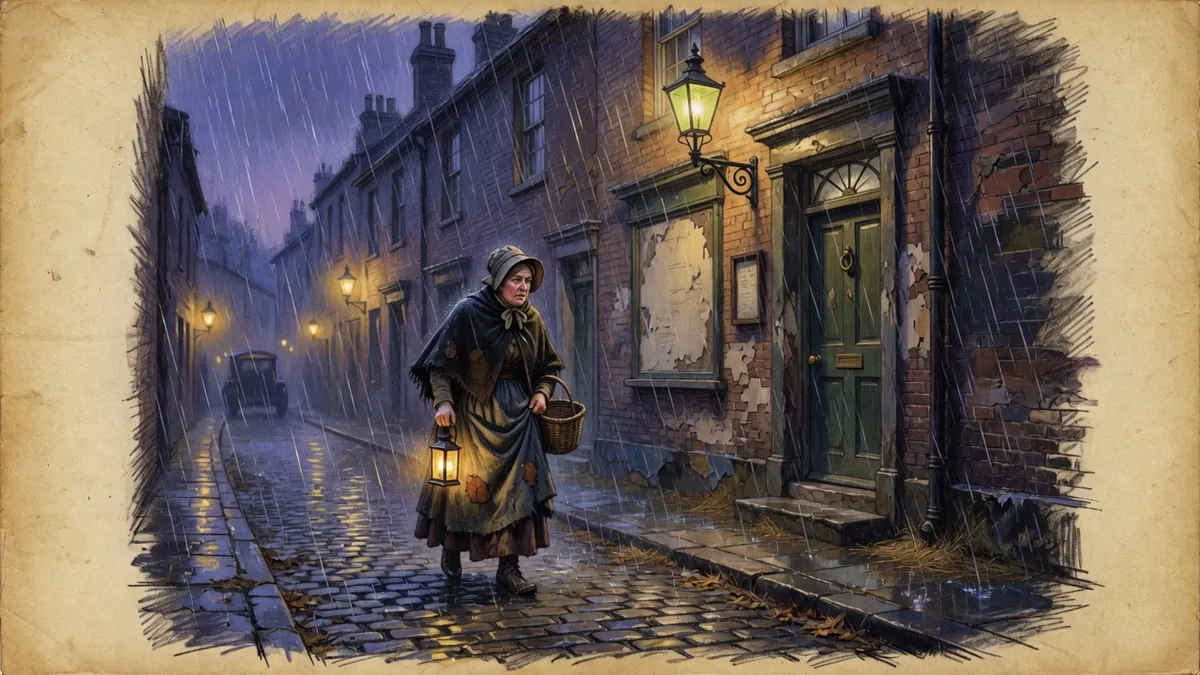
Carver's journey began in Diamond Grove, Missouri, in the final years of the Civil War. Born into slavery on the farm of Moses Carver around 1864, he was only a week old when Confederate night raiders (bushwhackers) swept through the property. The raiders kidnapped baby George, his mother Mary, and his sister, disappearing into the chaotic borderlands. Moses Carver hired a local scout named John Bentley to track them down.
While George's mother and sister were never heard from again, Bentley located baby George near the Arkansas border, abandoned and near death from whooping cough. Bentley returned the child, and Moses Carver rewarded the scout with the only valuable asset he had left: a racehorse valued at $300. Thus, one of the greatest scientific minds in American history was traded back into freedom in exchange for a horse.
Too frail and sickly to labor in the cotton fields, George was allowed to explore the Missouri woods. In this solitude, he developed a deep, almost spiritual connection with plants. He collected specimens, studied soil conditions, and revived dying plants in a secret garden, earning the nickname "the plant doctor" from neighboring farmers by the time he was a teenager.
The Battle for Education
The pursuit of scientific knowledge was a gauntlet of racial barriers. After earning a high school diploma, Carver received an acceptance letter from Highland College in Kansas. However, when he arrived on campus to register, the college president saw his race and turned him away on the spot. Undeterred, Carver spent years homesteading, working as a laundryman, and saving money.
In 1890, he enrolled at Simpson College in Iowa to study art and piano, demonstrating an extraordinary talent for botanical drawing. Recognizing his botanical genius, his art teacher Etta Budd urged him to transfer to the Iowa State Agricultural College. There, Carver became the college's first Black student, earning his master's degree in botany and later becoming its first Black faculty member, running the greenhouses and conducting pioneering research in plant pathology.
The Laboratory Salvaged from Trash
In 1896, Booker T. Washington recruited Carver to head the newly established Agricultural Department at the Tuskegee Institute in Alabama. Washington promised Carver a state-of-the-art laboratory, but when Carver arrived, he found a school that was deeply in debt and possessed no scientific equipment whatsoever.
Rather than resign, Carver took his students to the local trash heaps. They gathered discarded bottles, tin cans, zinc lids, wire, and cracked kitchen porcelain. Out of this garbage, they built Bunsen burners, test tube racks, beakers, and pulverizers. It was in this makeshift "junk lab" that Carver began a scientific revolution. To share his discoveries, he designed the Jesup Agricultural Wagon, a horse-drawn mobile classroom that traveled directly into the fields to teach illiterate sharecroppers how to analyze soil and improve crop yields.
Rescuing the Southern Soil
The post-Reconstruction South was facing an environmental catastrophe. Decades of continuous cotton cultivation had completely depleted the soil of nitrogen, leaving it barren. To make matters worse, the boll weevil—a destructive pest—was moving across the region, destroying remaining cotton fields and leaving thousands of families facing starvation.
Carver proposed a simple, elegant solution: crop rotation. He urged farmers to plant nitrogen-fixing crops like cowpeas, sweet potatoes, and peanuts. The crops successfully restored the soil, and harvests were massive. However, this success created a new crisis: there was no market for peanuts, and rotting piles of crops began accumulating in barnyards.
Carver locked himself in his laboratory to create demand. He isolated the starches, fats, and proteins of the peanut, eventually formulating over 300 products, including milk, cheese, paper, wood stains, face creams, and medicines. He also developed 118 products from sweet potatoes. Carver patented only three of these inventions, choosing to publish his discoveries in free bulletins. "God gave them to me," he said of his discoveries, "how can I sell them to someone else?"
The Fortune Refused and the Ford Alliance
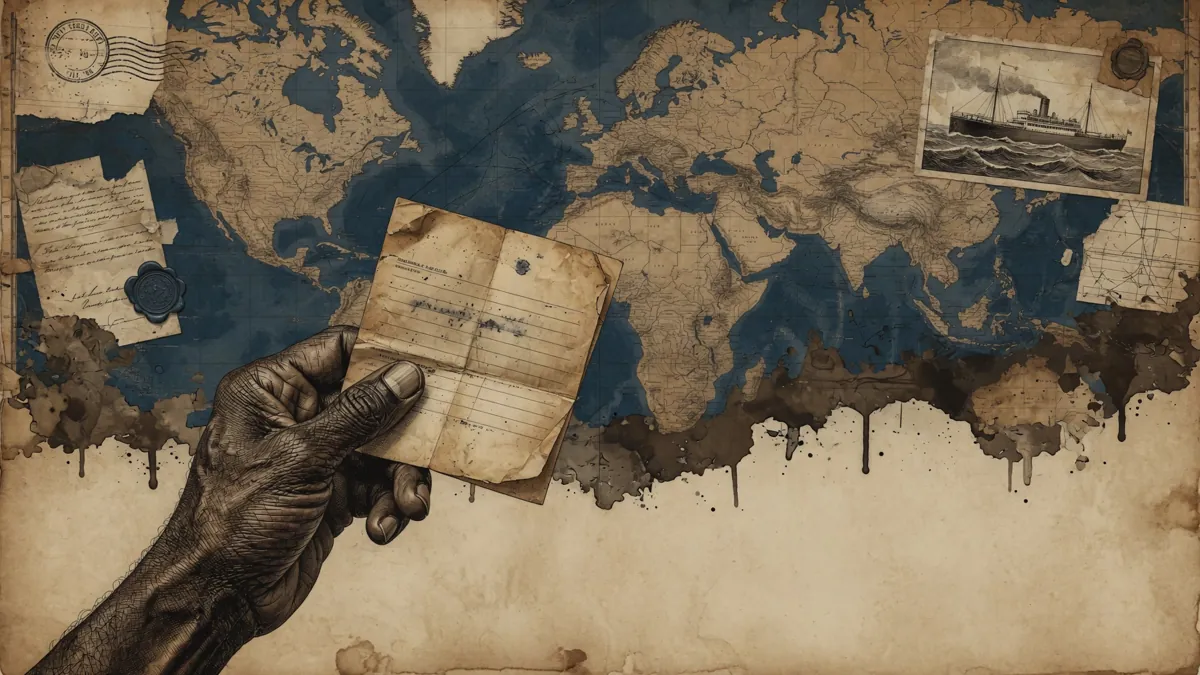
Carver’s work caught the attention of the industrial North. In 1916, Thomas Edison sent a telegram to Tuskegee, offering Carver a salary of $100,000 a year (equivalent to over $1.5 million today) to join his research labs in New Jersey to work on synthetic rubber. Carver declined the offer, choosing to remain at Tuskegee on a salary of just $1,500 a year. He believed his mission was to serve the poor farmers of the South, not to enrich an industrial corporation.
Though Carver rejected Edison's money, he formed a deep, lifelong friendship with another industrial titan: Henry Ford. Meeting in 1937, the two men discovered a shared belief in "chemurgy"—the practice of using agricultural products for industrial manufacturing. Ford built a laboratory for Carver in Dearborn, Michigan, and when Carver’s health failed, Ford installed an elevator in Carver's Tuskegee dormitory. The two collaborated on extracting synthetic rubber from goldenrod and developing soy-based plastics for Ford’s automobiles, sharing a vision of an organic, bio-based economy.
The Testimony of 1921
In January 1921, Carver traveled to Washington to testify before the House Ways and Means Committee in support of a tariff on imported peanuts. The committee, comprised of openly hostile, racist congressmen, mocked Carver as he approached the podium and allotted him only ten minutes. Carver calmly opened his display case and began showing them peanut milk, peanut paint, and peanut ink, explaining the chemistry with humor and ease.
Spellbound, the congressmen repeatedly voted to extend his time, keeping him at the podium for over an hour. When he finished, the entire committee stood and applauded. The tariff passed, establishing the economic viability of the Southern peanut industry.
Carver died in 1943, leaving his life savings of $33,000 to establish the Carver Research Foundation. Shortly after, President Franklin D. Roosevelt signed legislation to establish the George Washington Carver National Monument at his birthplace—the first national monument dedicated to an African American, and the first to a non-president. His legacy remains a testament to the power of public science, showing that genius does not require a pristine laboratory, only a curious mind and the desire to serve.
Sources and Bibliography
- Carver, George Washington (1898–1940). Tuskegee Experiment Station Bulletins (No. 1 - No. 42). Tuskegee Institute.
- Kremer, Gary R. (2011). George Washington Carver: A Biography. Santa Barbara: ABC-CLIO.
- McMurry, Linda O. (1981). George Washington Carver: Scientist and Symbol. New York: Oxford University Press.
- US House of Representatives (1921). Hearings on Tariff Readjustment. Committee on Ways and Means, 66th Congress. Washington: Government Printing Office.
- Hersey, Mark D. (2011). My Work Is That of Conservation: An Environmental Biography of George Washington Carver. Athens: University of Georgia Press.
- Benson Ford Research Center Archives. Henry Ford & George Washington Carver Correspondence (1937–1943). Dearborn, Michigan.
Methodological note: This biographical article is reconstructed from the official correspondence between George Washington Carver, Booker T. Washington, and Henry Ford, alongside the congressional transcripts of the 1921 Tariff Hearings. The biological and environmental aspects of Carver's work are verified through his published Tuskegee Experiment Station bulletins.
Legacy in Strokes (Uncovering the unseen footprints of history's giants). Watch the complete video documentary on our official YouTube channel.