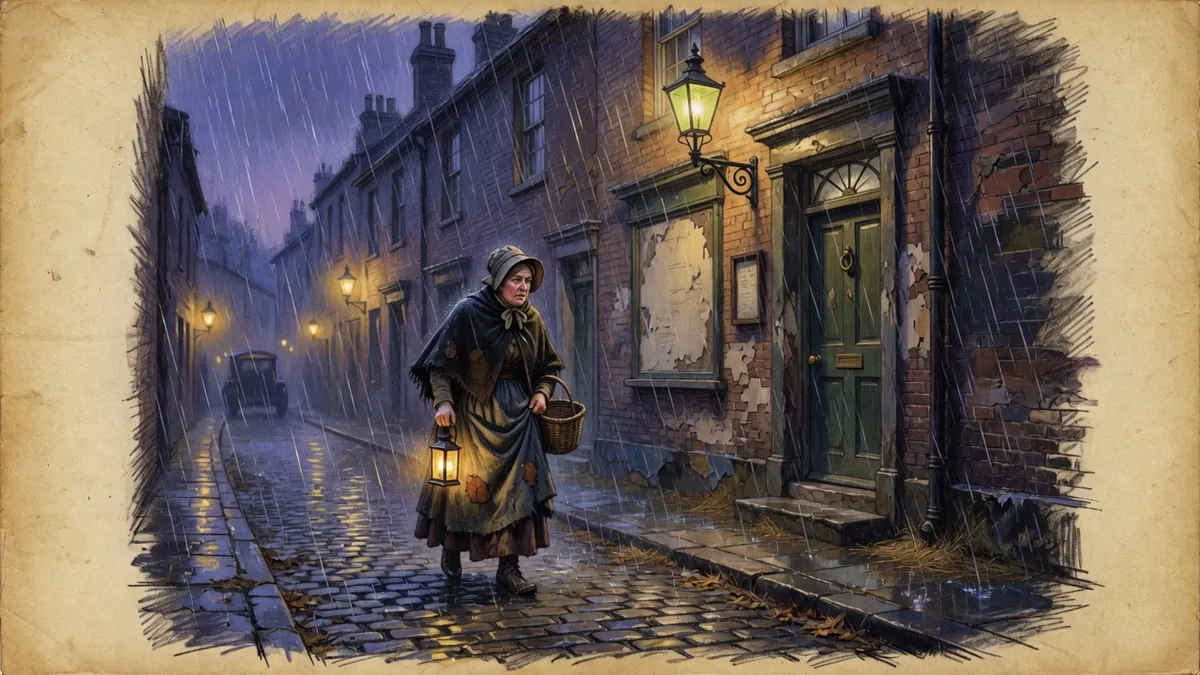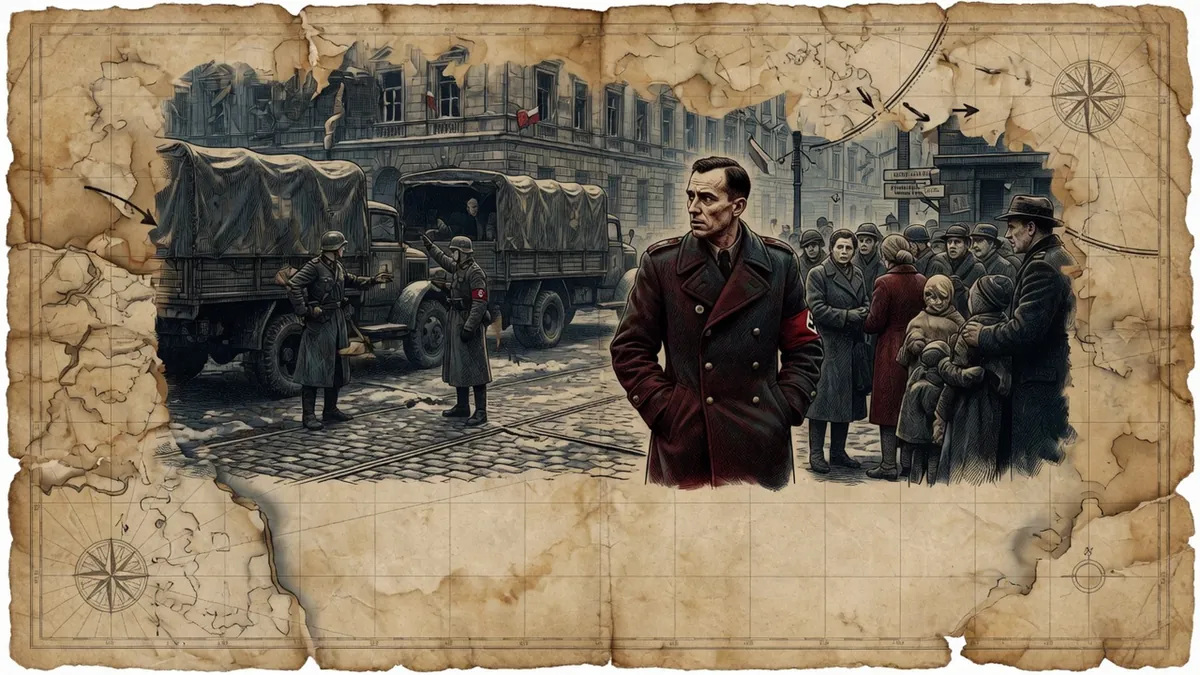
In 1943, the most dangerous work in Nazi-occupied France was not always holding a weapon. It was sitting alone with a wireless set, tapping Morse into the night while German detector vans hunted the signal. Stay on the air too long, and they could find you. An operator's life expectancy was measured in weeks. One of the people who volunteered for that job was a soft-spoken children's author named Noor Inayat Khan.
To London she was an agent of the Special Operations Executive. To resistance contacts she was a lifeline. To the Gestapo she was a ghost under the code name Madeleine. Instructors had doubted her. Official British memory would later answer them with the George Cross.
From Children's Tales to a Suitcase Radio
Noor-un-Nisa Inayat Khan was born in Moscow on 1 January 1914, the daughter of Inayat Khan, an Indian musician and Sufi teacher, and Ora Ray Baker, an American. The family lived in London and then in Suresnes near Paris. After her father's death in 1927, Noor—still a teenager—helped carry a household through grief. She studied child psychology and music, wrote for children in English and French, and in 1939 published Twenty Jataka Tales, stories of compassion drawn from Buddhist tradition.
If that résumé sounds like the opposite of a spy thriller, that is exactly why her later life still startles. She was raised with ideals of nonviolence. When France fell and the family fled to Britain in June 1940, she and her brother Vilayat discussed how to serve the Allied cause without becoming killers. He went toward minesweeping. She went toward the wireless key—the most exposed role in the field.
SOE, Doubt, and "Nonsense"
After service in the Women's Auxiliary Air Force as a wireless operator, Noor was recruited into SOE's F Section. Training reports were mixed: she worked hard; her Morse improved; she was also called unstable, too eager to please, unsuited to "two-faced" work. One finishing report famously suggested she was "not overburdened with brains" and doubted her fitness for the field. Beside such doubts, F Section head Maurice Buckmaster is widely reported to have written a dismissive correction—often rendered as "Nonsense."
Vera Atkins, F Section's intelligence officer, later tested Noor's resolve in London when colleagues tried to stop her departure. Atkins's standard was clear: confidence mattered, and the only unforgivable crime was to go abroad and let comrades down. Noor insisted she was ready. On the night of 16/17 June 1943 she was flown into occupied France by Lysander under cover as Jeanne-Marie Renier, a children's nurse. To SOE she was Madeleine—the first woman sent as a wireless operator rather than a courier.
When Prosper Fell, She Stayed
Within days of her arrival, the Prosper network around Paris began to collapse under German arrests. London offered extraction. Noor refused. The George Cross citation states that she would not abandon what had become a principal and most dangerous post, because she did not want to leave French comrades without communications and still hoped to rebuild. For roughly three months after the catastrophe began, she remained a critical radio link in a hunted city.
Around 13 October 1943 she was betrayed and arrested. The identity of the betrayer remains contested in the literature; Renée Garry is frequently named, but postwar proceedings did not produce a clean, settled conviction. What is not in serious doubt is the aftermath: detention at 84 Avenue Foch, escape attempts, and a refusal—according to the official British citation—to provide operational information.
Tragedy compounded courage. The SD recovered notebooks in which Noor had copied messages, contrary to field security practice—likely tied to incomplete training and the rush to place operators. German services used material to help imitate traffic; London was slow to treat the channel as compromised. That failure is part of the Prosper disaster's wider intelligence story, not a moral verdict on her courage under interrogation.
Pforzheim, Dachau, and the Record
After a rooftop escape attempt in November 1943 with other prisoners, Noor was recaptured, refused to renounce further escapes, and was sent to Germany. She was held under severe conditions at Pforzheim. On 12 September 1944 she was transferred to Dachau with three other women agents—Yolande Beekman, Madeleine Damerment, and Eliane Plewman—and executed the following morning. Fine-grained details of the shooting rest on secondhand Gestapo statements and must be handled carefully. The essential fact is secure: four women agents were murdered; Noor was thirty.
Britain awarded the George Cross posthumously in 1949. France awarded the Croix de Guerre. A memorial bust stands in Gordon Square Gardens, Bloomsbury, unveiled in 2012—near the London landscape of her early childhood.
Why Noor Still Matters
Noor Inayat Khan's legacy is not that she was fearless. Training records show fear. Her legacy is that she chose the most dangerous post available to her ethics, stayed when extraction was offered, and—by the official British account—refused to feed the enemy her network. In an age that often confuses hardness with courage, her story insists on another definition: soft-spoken people can still hold the line when the line is a Morse key in a dark room.
Sources and References
- UK National Archives, HS 9/836/5 (SOE personnel file materials; see also TNA education resource "Who was Noor Khan?").
- London Gazette, 5 April 1949 — George Cross citation for Nora Inayat-Khan.
- Basu, Shrabani. Spy Princess: The Life of Noor Inayat Khan. 2006.
- Foot, M.R.D. SOE in France.
- Helm, Sarah. A Life in Secrets: Vera Atkins and the Lost Agents of SOE. 2005.
- Kramer, Rita. Flames in the Field.
- Imperial War Museums collections; Air Forces Memorial, Runnymede; Gordon Square memorial records.
Method note: Betrayal attribution and some interrogation minutiae remain debated. Execution details from secondhand Gestapo testimony are not treated as cinematic fact. "Liberté" as a last word is traditional reportage, not a courtroom transcript.