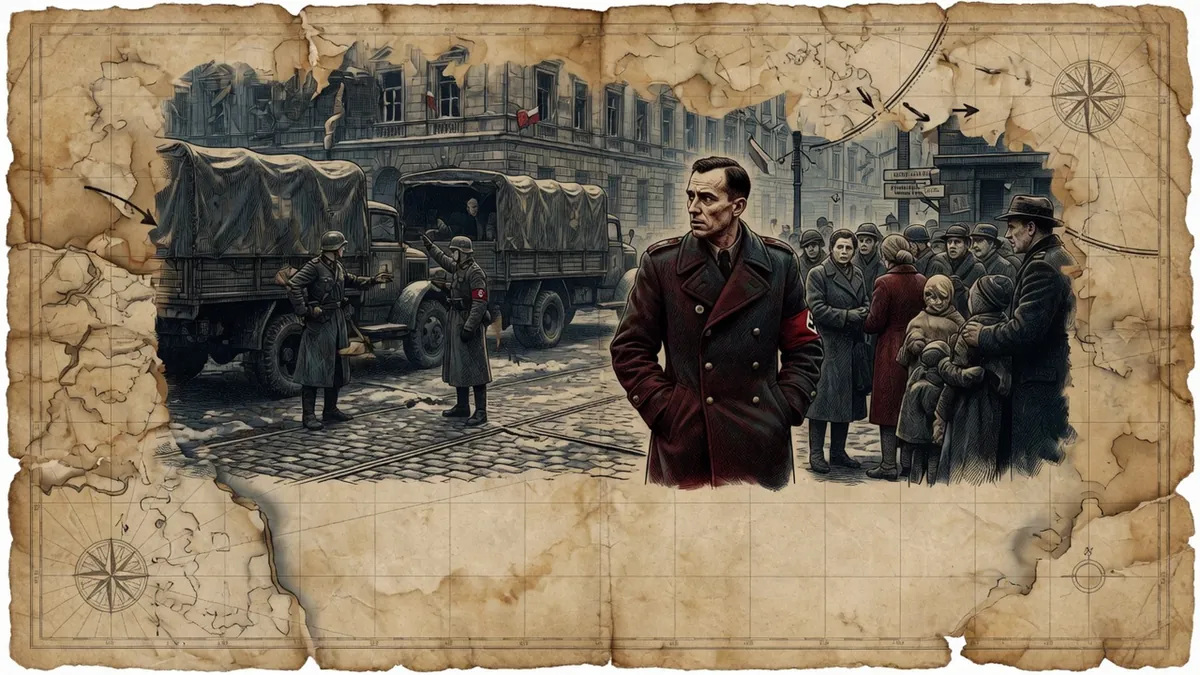
Most history stories are about people trying to escape prisons or capture. But in September 1940, a Polish army officer made a decision almost no one would believe: he deliberately walked into a Gestapo street roundup in occupied Warsaw, ensuring he would be arrested and sent to a brutal new concentration camp in southern Poland. His goal was to infiltrate the camp, build a secret resistance army, and warn the world about the atrocities occurring inside. His name was Witold Pilecki, and the camp was Auschwitz.
For two and a half years, branded only as prisoner 4859, Pilecki operated a massive secret network under the noses of the SS. Official British and Polish historical archives now document his reports as the first detailed warnings the Allies received about the Holocaust—warnings that the world was unfortunately not ready to believe.
Cavalryman, Father, and Rebel
Witold Pilecki was born on 13 May 1901 in Olonets, Russia, where his family had been exiled after participating in the Polish January Uprising against Russian rule. After the family returned to Poland, Pilecki served in the Polish scouts and fought with distinction in the Polish-Soviet War of 1919–1921. By the 1930s, he had settled into a quiet life as a landowner, husband to Maria, and father of two children. But in September 1939, Nazi Germany invaded Poland, followed by the Soviet Union from the east, and Pilecki was called to serve as a cavalry officer.
When Poland was occupied, Pilecki refused to give up. He co-founded the Tajna Armia Polska (TAP, Secret Polish Army) in Warsaw. By mid-1940, rumors were circulating about a massive new prison camp the SS was building near Oświęcim. To discover what was happening inside, Pilecki proposed a daring plan: he would volunteer to enter the camp. Using a forged identity card under the name Tomasz Serafiński, he walked into a Gestapo street sweep on 19 September 1940.
Building a Secret Army: ZOW
Unloaded from a cattle car at Auschwitz on the night of 21 September 1940, Pilecki entered a world of searchlights, barbed wire, and systematic brutality. Branded as prisoner 4859, he quickly realized that survival alone was a monument to resistance. Yet, within a month, he began executing his mission, recruiting trusted officers, doctors, and specialists to form the Związek Organizacji Wojskowej (ZOW, Union of Military Organization).
To prevent betrayal under torture, Pilecki structured the ZOW in five-man cells. No member knew who belonged to other cells, protecting the network from discovery. ZOW members smuggled extra food, stole SS uniforms, and prepared plans for an armed uprising in case of an Allied raid on the camp. By 1942, the ZOW had grown to hundreds of members, establishing a mutual aid network that saved countless lives.
Smuggling the Warning
Pilecki’s most critical task was sending intelligence to the outside world. He wrote detailed reports describing camp conditions, executions, and later, the construction of gas chambers for the systematic murder of European Jews. These reports, often called "Witold's Report," were smuggled out by escaping prisoners or sympathetic Polish workers. Forwarded to London via the Polish government-in-exile, Allied high commands received his words with shock but ultimately dismissed them as wartime exaggerations.
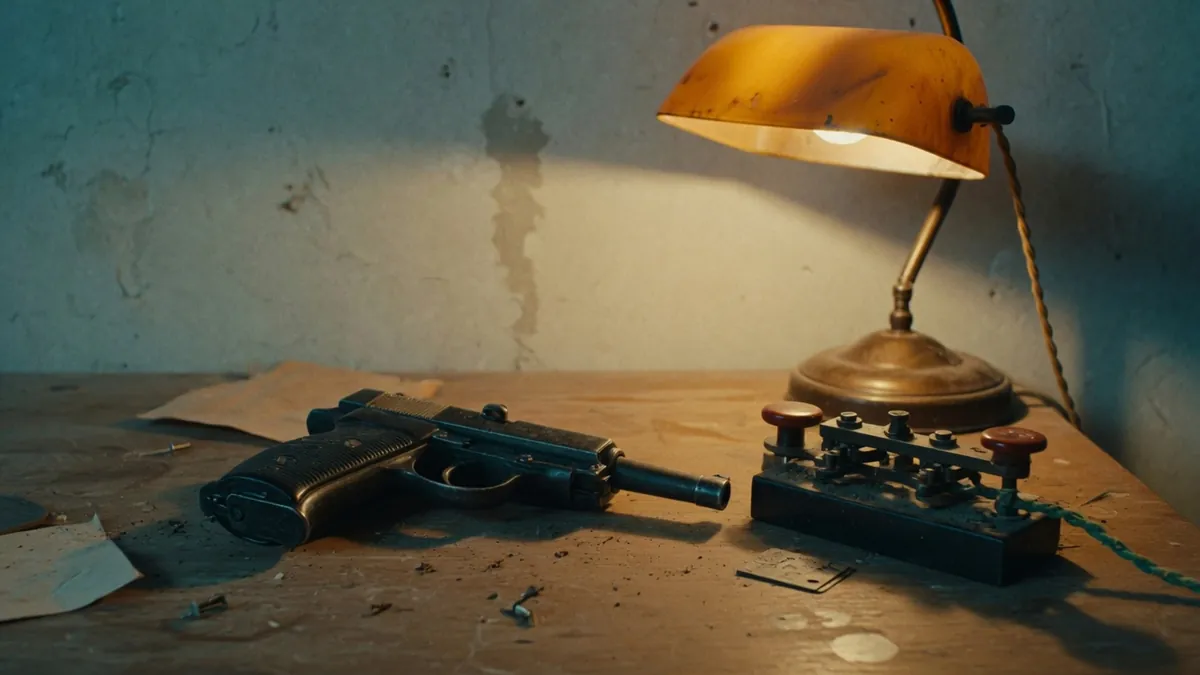
Frustrated by the silence, Pilecki’s network built a shortwave radio transmitter from smuggled parts in the camp hospital. For months, they broadcast details of Auschwitz directly to the Polish underground in Warsaw. When the Gestapo began using detection vans to locate the signal, the ZOW dismantled the radio, but the SS was closing in. Fearing the execution of his entire network, Pilecki decided to escape.
The Daring Bakery Escape
On the night of 26/27 April 1943, during a night shift at the camp bakery located outside the main fence, Pilecki and two comrades made their break. They cut the telephone line, pushed open a heavy exit door, and fled into the dark forest under guard fire. Crossing the Soła river, they traveled for days until they reached Warsaw. There, Pilecki wrote his final, comprehensive report on Auschwitz, urging the Home Army to attack the camp. The request was denied due to the overwhelming military strength of the SS garrison.
Pilecki went on to fight in the heroic Warsaw Uprising of 1944. Captured by German forces, he spent the rest of the war in a POW camp in Bavaria. But when the war ended, Poland was occupied by Soviet forces, who replaced Nazi control with a communist regime.
interrogations and Soviet Betrayal
Loyal to the Polish government-in-exile, Pilecki returned to Warsaw in late 1945 to gather intelligence on Soviet NKVD atrocities and the executions of Polish resistance fighters. On 8 May 1947, he was arrested by the communist secret police. He was tortured brutally for months—his fingernails torn out and his bones crushed. During a brief visitation, he told his wife that his time at Mokotów Prison made Auschwitz look like "just a play."
After a heavily rigged communist show trial, Pilecki was sentenced to death. On 25 May 1948, the man who had volunteered for Auschwitz was executed by a bullet to the back of the head. The communist regime completely banned his name and story, leaving him in historical exile until the fall of the Berlin Wall in 1989.
Sources and References
- UK National Archives, Sikorski Historical Institute records on Polish Home Army intelligence.
- Pilecki, Witold. The Auschwitz Volunteer: Beyond Bravery. Aquila Polonica, 2012.
- Fairweather, Jack. The Volunteer: The True Story of the Resistance Hero Who Infiltrated Auschwitz. Custom House, 2019.
- Garlinski, Jozef. Fighting Auschwitz: The Resistance Movement in the Concentration Camp. 1975.
- Institute of National Remembrance (IPN). Court records and show trial files of Mokotów Prison.
Method note: Interrogation transcripts from IPN archives and Pilecki's official 1945 report form the primary factual basis of this narrative. Secondary accounts of execution details are cross-referenced with Polish state archives.